
It starts before you even look at your result again
Before you're allowed to compare your answer to the archetype description, I ask three questions. What your brand actually sells once you strip away the product or service. How you want someone to feel once they're finished with it. What your brand exists to do, full stop. Write those fast, no overthinking, then hold them up against the archetype you got. If they don't line up, that's information.
Then I show you the shape of the archetype you landed on
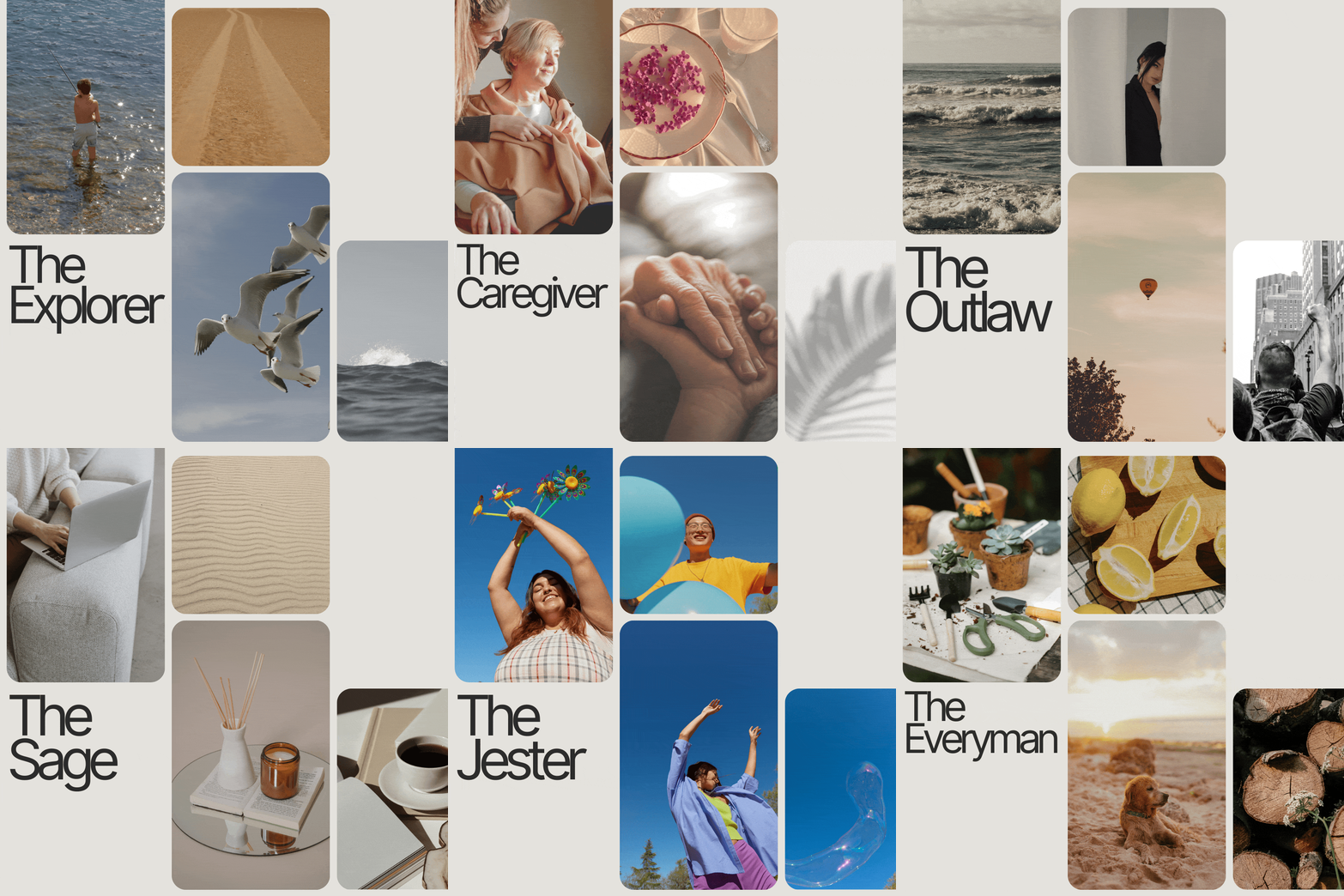
For Sage, that shape is clarity. Taking something genuinely hard and making someone else actually get it, not just nod along. Every archetype has a trap that comes with it, and Sage's is knowledge used as a wall instead of a bridge, the jargon, the gatekeeping, the faint talking-down tone that creeps in when you've known something so long you forget it wasn't always obvious. I give a specific test for catching that in the wild (explain your hardest idea to someone outside your industry and watch whether they get it or politely glaze over) and a fix that's short enough to prove whether it worked.
Three moves, that week, not someday
Rewrite your one-liner using what the gut check surfaced. Run your archetype's test on yourself. Find the one place your brand is quietly borrowing a different archetype's voice, and cut it. Small, specific, done by Friday.
And then the part the quiz never touches at all
Purpose that isn't just your to-do list with a bow on it. The exact pain point people are paying you to make disappear, not the one sitting politely on your about page. A positioning line that actually stalls you on the fourth blank, because that's the one that separates you from everyone doing roughly the same thing. Five words your brand would never say, and the harder version, five your competitors wouldn't say either. And the story underneath it, which I don't ask anyone to write alone in a worksheet, because it's the part people either bury completely or lead with so hard it drowns out everything else.
Real talk: I didn't run this process on my own brand for the first year. I borrowed Sage's clarity in my captions and Outlaw's edge in my DMs and wondered why nothing felt consistent. It wasn't a design problem. It was that I'd never made myself answer the audience question honestly.
A quiz result is a starting point. What you do with the next twenty minutes is the actual strategy.
If you haven't taken the quiz yet, that's step one. If you have and you're holding your result wondering if it's actually right, that's exactly what the worksheet is for, and you can grab your personalised copy after the quiz.
stay curious
Bec x